For decades, transcripts have served as a primary signal of whether students are ready for what comes next, meaning GPA, course rigor, and credit completion most often influence decisions about postsecondary planning. These indicators are important, and they remain among the strongest predictors schools have of academic performance.
But transcripts only tell part of a student’s story. They don’t capture the life skills students use to handle the demands behind their grades—the often-hidden factors that predict whether academic preparation leads to college, career, and life success after high school. How students manage time, respond to setbacks, and persist when coursework becomes complex often matters as much as what appears on their transcripts.
Though many districts already collect some of this information (for example, data from attendance, engagement patterns, and student surveys), it’s often siloed in different systems and reviewed by different teams. But when viewed alongside academic performance, these signals can offer districts a more coherent picture of postsecondary readiness.
Context is what makes attendance, engagement, and life skills data usable. It helps districts connect what students have achieved academically with how they are showing up day to day, allowing leaders to identify needs earlier and plan supports more precisely before students enter postsecondary settings.

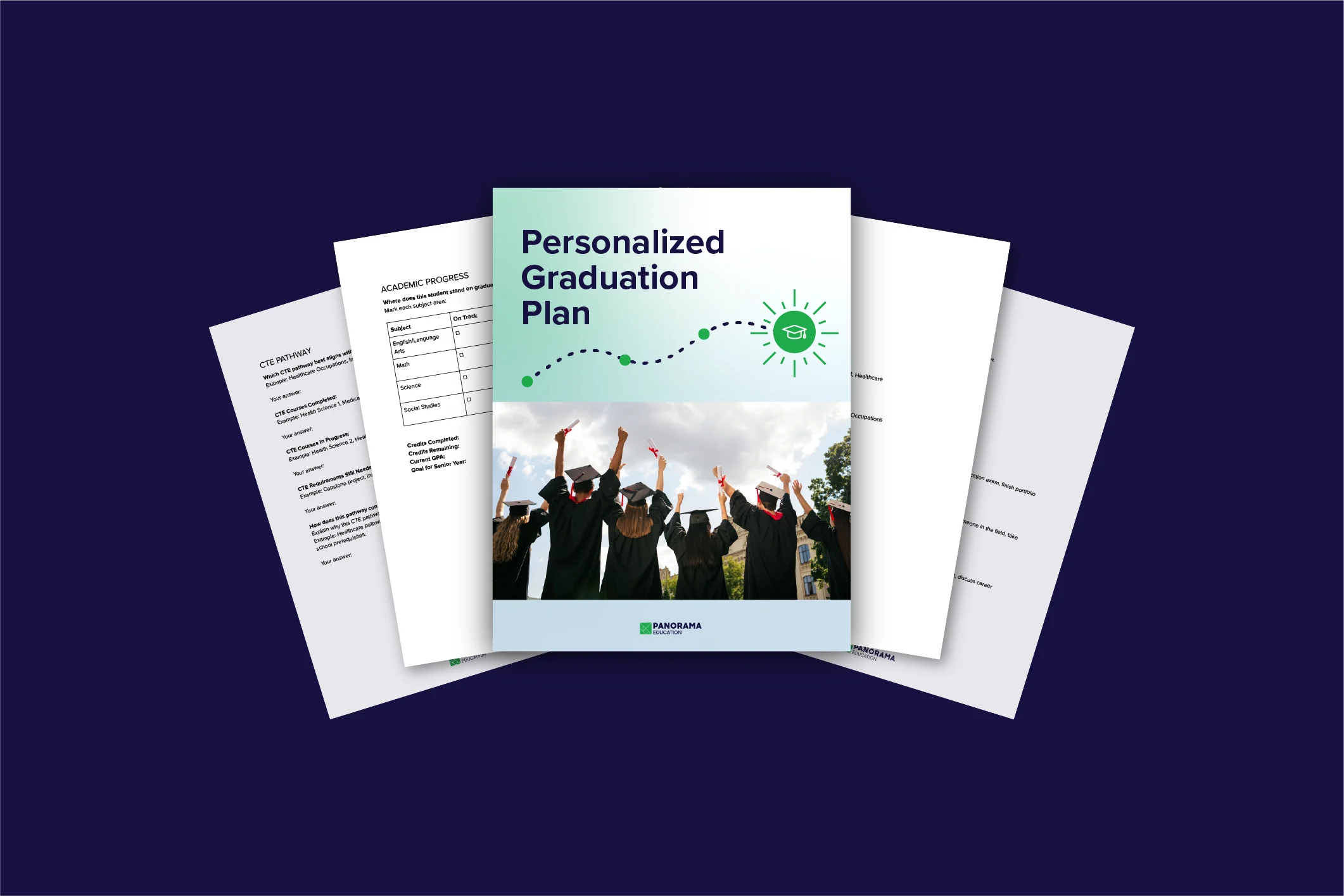
College and Career Readiness Resource Pack
Download resources designed to help district teams turn readiness goals into clear action, grounded in proven strategies, student voice, and real school examples.
What Transcripts Tell Us—and Why They Aren't Enough
There's a good reason transcripts sit at the center of college and career readiness conversations. GPA is one of the clearest signals of student performance districts already have. It’s widely available, it’s familiar to students and educators alike, and it’s useful for tracking academic progress.
At the same time, transcripts are retrospective by design. They summarize performance after the fact. They show what a student earned, not how that performance was sustained. A transcript cannot:
- Show how a student manages time or organizes long-term projects
- Reveal whether a student is persistent after a setback
- Pinpoint when a student disengages
- Capture whether a student seeks help or adjusts their learning strategies
Postsecondary success requires more independence than high school typically demands. Grades alone don’t show whether students can manage deadlines, recover from setbacks, or seek support when needed.
If districts define college and career readiness by transcripts alone, they risk equating performance with preparation. College and career readiness requires insight into how students learn, not just what grades they earned.
The Research Case for Life Skills as Predictors
Panorama’s Data Science and Applied Research team analyzed GPA data from 1.7 million students, and found that specific life skills are meaningfully related to how students perform academically relative to their peers.
The skills most strongly associated with academic standing include:
- Self-Management: Managing emotions, thoughts, and behaviors in service of goals
- Self-Efficacy: Belief in one’s ability to succeed in specific tasks
- Social Awareness: Understanding context and responding appropriately to others
- Classroom Effort: Sustaining effort and actively engaging in learning
- Valuing of School: Perceiving school as meaningful
- Learning Strategies: Planning, monitoring, and adjusting learning approaches
By accounting for differences in GPA scales and attendance patterns across districts, the analysis strengthens confidence that life skills provide insight beyond grades alone.
The relationship between life skills and GPA is measurable and meaningful.
Panorama's research found that differences in how students report life skills correspond to meaningful differences in academic standing. For example:
|
These relationships remain significant even when attendance and demographic factors are taken into account. Life skills do not replace grades. Rather, they strengthen prediction when paired with academic data.
Life skills matter for college and career readiness.
Transcripts show past performance, but life skills signal how students are likely to respond when structure decreases and expectations increase.
Middle school is a turning point, when students must adapt to greater academic independence. High school raises the stakes further, requiring sustained effort, long-term planning, and engagement across multiple demands.
Postsecondary environments amplify these expectations. Whether students pursue college, training programs, or career pathways, success often depends on their ability to manage time, persist through setbacks, adjust strategies, and seek support.
When districts measure life skills alongside GPA, they gain earlier visibility into readiness behaviors, not just academic outcomes. That allows leaders to strengthen the habits that sustain success after graduation.
From Isolated Signals to a Unified View of Readiness
Life skills only become actionable when they are interpreted alongside the broader indicators districts already use to define readiness.
A survey topic on self-management or classroom effort does not stand on its own. Its value comes from how it aligns with academic performance, attendance patterns, behavior trends, graduation milestones, and pathway participation. Together, those signals show whether a student is not only earning credits, but developing the habits that sustain success after high school.
Many districts collect these indicators, but they are often stored in different systems and reviewed by different teams. Academic progress may be examined in one meeting. Attendance in another. Survey data in a separate report. Graduation tracking and pathway participation somewhere else entirely.
When these signals are reviewed in isolation, readiness conversations become incomplete. Teams may see that a student is passing courses without noticing declining engagement. They may track attendance without understanding changes in confidence or effort, or may confirm that graduation requirements are met without assessing whether the student is prepared for the independence that comes next.
Readiness becomes clearer when these indicators are viewed together over time, as patterns emerge. Advisors can ground conversations in more than GPA. Intervention teams can act before performance declines. District leaders can see how habits and outcomes move in tandem across grade levels.
Life skills do not replace transcripts. They provide the context that helps districts interpret them more accurately. And when readiness indicators are connected into a coherent student view, the work shifts from checking requirements to strengthening preparation.
Using Life Skills to Strengthen College and Career Readiness Supports
When districts integrate life skills into their CCR frameworks, the value shows up in the decisions leaders make every day. With Panorama Surveys capturing student voice and perception data, and Student Success bringing those insights alongside academic and attendance information, teams can interpret progress more clearly and plan supports with greater precision across advising, graduation planning, and postsecondary preparation.
Advising students on pathways
Transcripts and GPA remain crucial to course placement and graduation planning, but life skills add important nuance. Two students with similar academic records may need different levels of structure, pacing, or support depending on how they manage workload or respond to challenges.
With Panorama Pathways and Student Success working together, advisors can view academic progress alongside life skills insights to guide course selection and postsecondary planning. This makes advising more aligned to what students are likely to encounter next, whether that’s a CTE pathway, dual enrollment, or a four-year institution. Instead of relying on grades alone, advisors can personalize pathway conversations using a fuller picture of student readiness.
Identifying who needs support before graduation
When life skills are measured consistently and reviewed alongside academic data, they can help surface risk signals that grades alone may not show. Patterns in self-management or classroom effort can help schools prioritize which students need coaching, check-ins, or targeted support to stay on track for graduation.
Supporting persistence beyond enrollment
These same signals can also help districts anticipate which students may struggle to persist after graduation, not just whether they are academically eligible to finish high school. Postsecondary success is shaped by habits that develop over time.
By connecting survey-based life skills data with graduation planning in Student Success and graduation tracking in Pathways, districts can focus transition planning on the students who may need stronger routines, planning supports, or help-seeking strategies. Panorama Solara can further assist by highlighting trends and potential risk signals across student data, supporting more focused transition conversations and postsecondary advising plans.
Connecting Signals to Smarter Decisions
Life skills data helps districts move from reactive to proactive support. Instead of treating academics, attendance, and engagement as separate signals, leaders can examine how they interact over time within Student Success. With Solara helping teams surface trends more quickly and Pathways connecting progress to long-term goals, districts gain a clearer view of where students are building momentum and where they may need additional support.
At the system level, Panorama Surveys provide consistent measurement of life skills across grade levels, while Student Success and Pathways connect that insight to graduation and postsecondary planning. Rather than adding new initiatives, districts can make smarter use of the systems they already have.
The result is a more focused, actionable approach to college and career readiness, grounded in connected data and informed decision-making.
A More Complete Definition of Readiness
Districts need visibility into the behaviors that sustain success, not just the grades that document it. Life skills data gives leaders a clearer picture of how students are developing over time and where systems can better support independence, follow-through, and long-term planning. That insight makes readiness work more proactive and less reactive.
For district teams ready to take the next step, our College and Career Readiness Resource Pack provides practical strategies, readiness survey questions, and a real-school example to help operationalize a stronger college and career readiness approach.
Download the toolkit to move from measuring readiness to building it.