Districts rely on data to guide decisions every day. Attendance reports, course grades, credit counts, assessment results, postsecondary plans. The challenge is not a lack of information. It’s that when it comes to student readiness, it can be genuinely hard to see the full picture of whether a student is on track.
Most readiness decisions are made using pieces of a student’s experience reviewed separately: academic progress might live in one system, while attendance and behavior are tracked in another. CCR milestones, CTE participation, life skills development, and student voice are often tracked in entirely different places.
The result? Well-intentioned decisions might be made without full visibility into students’ experiences.
Readiness Requires More Than One Signal
Graduation readiness does not hinge on a single indicator. It takes shape at the intersection of academic progress toward graduation requirements, attendance and behavior patterns, postsecondary and career planning, participation in CTE pathways, life skills development, and what students themselves say about their confidence, goals, and sense of preparedness.
Most districts already collect some of this information. Many collect all of it. The real challenge is using it together in a way that helps educators understand where students are and what support they need next.
When data lives in silos, readiness may become something that is checked periodically rather than built over time. But when data is connected, readiness becomes something educators can actively shape.
When Partial Data Leads to Late Surprises
Consider Student A.
On paper, everything looks fine. Grades are solid. Attendance is steady. The student is weeks away from graduation when a transcript review flags a missing credit tied to a scheduling error from an earlier year. It is no one’s fault, but the discovery comes too late to resolve easily. What should have been a moment of celebration turns into stress for the student, family, and school team scrambling for last-minute options.
Now consider Student B.
By high school, this student is failing math and is at risk of not graduating on time. The struggle feels sudden, but it is not new. Attendance patterns started to slip in late elementary school. Confidence in academic ability declined in early middle school. Those early signals existed, but they lived in different places and were never viewed together. By the time the academic risk is visible, the window for easier intervention has narrowed.
These patterns are familiar across many districts. The full story only becomes visible when multiple signals are viewed together.
The Risk of Making Readiness Decisions With Partial Data
When readiness is evaluated using only part of the picture, gaps often go unnoticed until options narrow. Supports arrive later than intended or miss the root cause of the challenge. College and career readiness efforts become reactive instead of intentional.
This can feel frustrating for educators who are working hard and care deeply about student outcomes. It is not a question of effort. It is a systems challenge.
Seeing the Whole Picture Changes What's Possible
When districts connect academic progress, attendance, behavior, CCR milestones, life skills, and student voice data, patterns surface sooner. Trends that might have looked isolated start to make sense. Decisions become clearer rather than more complicated.
Instead of asking, “Why is this student suddenly off track?” teams can ask, “What have we been seeing over time, and what support would help most right now?”
Using complete data shifts readiness work from checking progress to shaping outcomes.
Complete-Data Decision Making Depends on Connected Systems
Using all readiness data together requires systems that unify insight, create shared understanding, and support consistent action across schools. When districts can see academic progress, engagement, CCR milestones, life skills, and student voice in one place, readiness becomes something educators can actively build, not something they check at the end.
When adults share a holistic view of each learner, students move forward with clarity, confidence, and a stronger sense of what’s possible.
The goal: better visibility, earlier action, and fewer last-minute surprises for students who deserve a clear path forward long before graduation day.
Turning Insight Into Action
District leaders don’t need more data. They need a clearer way to use the data they already have to guide readiness decisions earlier and more consistently, because readiness is about more than meeting requirements. It is about whether students leave high school with direction, real-world skills, and confidence in what comes next.
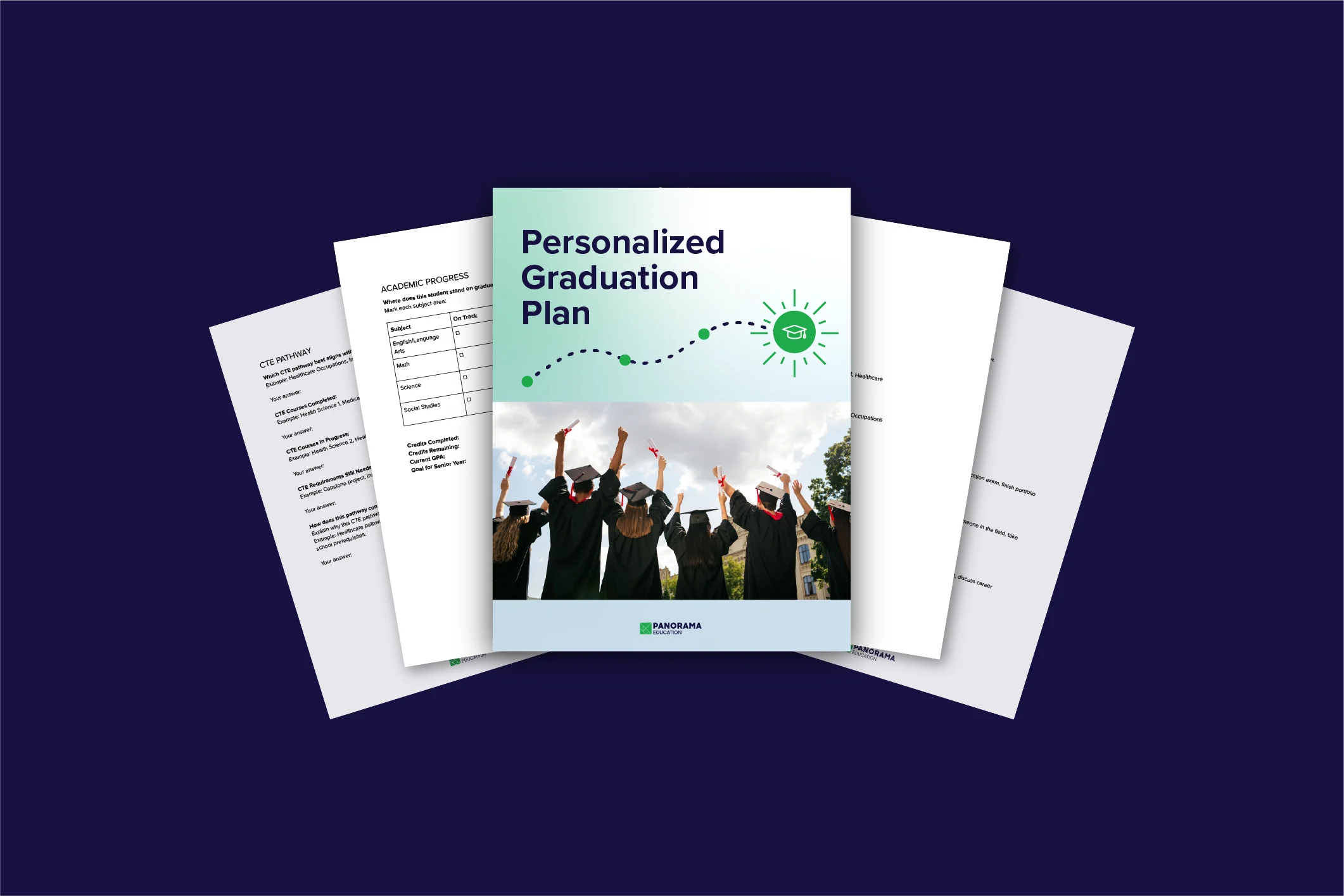
That’s why we created the College and Career Readiness Resource Pack. It's a practical toolkit to help district teams turn readiness goals into clear, actionable steps. Inside, you'll find high-impact CCR strategies, graduation readiness survey questions, and a real-school case study on strengthening graduation tracking and CTE pathways.
Download the resource pack to bring greater clarity to your readiness efforts and help every student move forward with a clear path long before graduation day.