AI Perceptions and Readiness Survey
Understand stakeholder priorities, familiarity, and readiness to use AI in schools.
Panoramic 2026 Virtual Summit
Discover how educators and leaders are putting purpose behind AI to drive real improvements in attendance, literacy, and student supports.
Driving real impact with AI in schools starts with student outcomes and a clear, sustainable vision, not chasing the newest tools. Hear Dr. Casey Bardin, Director of Pupil Services at North Colonie Central Schools, share how district leaders can implement AI in K–12 education in ways that meaningfully support teaching, learning, and student success.
In this episode, Dr. Bardin shares how his district moved from early curiosity about AI to a responsible, goal-aligned strategy rooted in academic excellence and instructional priorities. He explains how North Colonie began by using surveys to better understand student experiences and evolved into leveraging Panorama Education’s AI tools to strengthen MTSS processes, improve instructional consistency, and measure progress with real-time data. The conversation highlights how thoughtful AI integration can boost instructional rigor, increase engagement, and create more consistent, student-centered experiences across schools.
Host | CEO &
Co-founder of Panorama Education
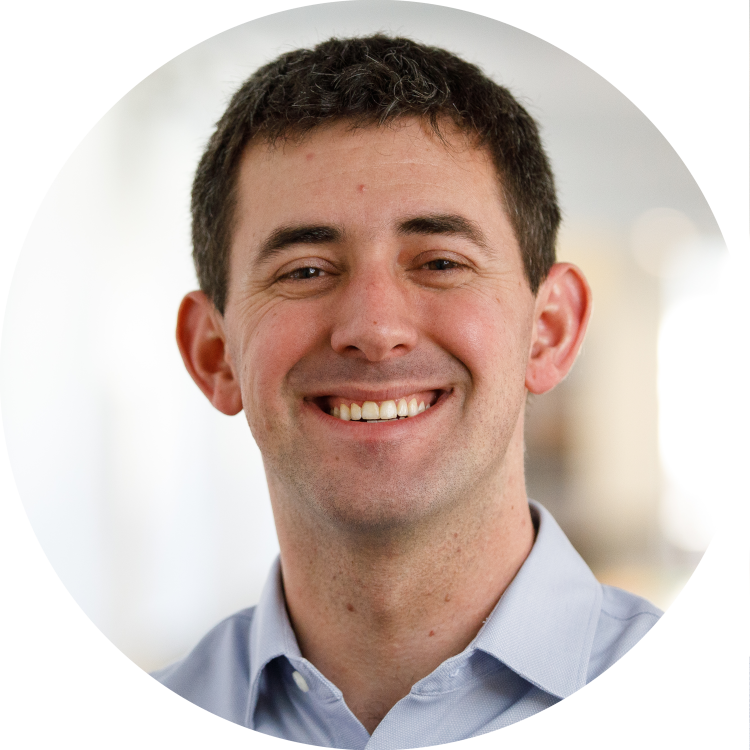
Director of Pupil Services, North Colonie Central Schools
This is the podcast where top K-12 education leaders and experts explore how AI is reshaping teaching, learning, and school leadership—one real story at a time. Hosted by Aaron Feuer, CEO and Co-Founder of Panorama Education, each episode offers a roadmap for implementing AI in your school or district, along with tools, lessons learned, and practical strategies you can bring to your team.
You’ll hear directly from leaders applying AI to solve big challenges like chronic absenteeism, literacy gaps, and teacher burnout in ways that are safe and secure, personalized, and anchored in driving student outcomes. Wherever you are in your school or district’s AI journey, this show is your guide to impactful AI in K-12.
Stay connected to the conversations shaping the future of learning.
Subscribe to The Leading & Learning with AI Podcast and join K–12 education leaders, innovators, and practitioners exploring how artificial intelligence is transforming teaching, learning, and school leadership.
🎧 New episodes release every other Monday. Each episode offers practical insights, real-world stories, and frameworks you can bring back to your team as you lead your district’s AI journey.
Subscribe on your favorite platform:
If you’ve been inspired by what you’ve heard, please take a moment to leave a review on Apple Podcasts. Your feedback helps other district and school leaders find the podcast and join the growing community of educators driving meaningful, secure, and student-centered AI innovation.
Aaron Feuer:
Welcome, everyone, to another episode of Leading and learning with A.I. i'm Aaron Fuer, and today's conversation is going to be a fun one. We've got Casey Barden with us. Casey is the director of Pupil services at North Colony Central Schools just outside Albany, New York. His district serves about 6,200 students across eight schools, and he's doing incredible work, helping to reimagine what instructional leadership looks like in this AI moment. And if you've been following what's happening at schools right now, you know, the stakes are high. There are enormous opportunities with AI and enormous questions. How do we make sure the work is responsible, sustainable, focused on student learning, and above all, drives outcomes for our students? And that's exactly what we're diving into today.
Aaron Feuer:
What does it look like for a district to begin implementation in classrooms? And how do leaders like Casey keep teachers, principals, and students at the center of the journey? So, Kasey, I am so excited that you're here, and thank you for being here with us today. And before we get started with AI, I want to start with you, and I'd love to hear what drew you into education. Leadership.
Dr. Casey Bardin:
Yeah. Well, first, thanks so much for having me. I'm really excited to be here today, and I really appreciate the opportunity. So, you know, and I appreciate your first question. It's what drew me to education was really, you know, teaching at the elementary level and more specifically, you know, leadership. I had a great mentor, an elementary principal that really saw some potential in me from a leadership standpoint. And what I respected so much about his leadership was the conditions, the culture that he created within that building. And it was one built on, you know, mutual respect of staff, students, and parents and really brought them in and thought really specifically about every single portion condition of the building and what that meant for families and students.
Dr. Casey Bardin:
So it was his mentorship that really encouraged me to go forward with leadership. And since then, you know, I viewed my role in leadership to really be the voice for students that don't have one at times and be the advocate that. That students need and families need to support some of the most challenging situations that we see related to behavior, students with disabilities, and so on.
Aaron Feuer:
I love that entry point. And I think, as I've shared with you, my grandfather was an elementary principal, and so I love all of the roles in the school system, but that one has a special place in my heart. And that last piece you shared about supporting students is the essence of it, I don't think when it comes to AI, you know, I've Come to know North Colony's journey well. And I think a lot of our listeners are wrestling with the same questions that your district faced at the start of your journey. How did your district's journey with AI begin and what sparked your decision to move from this curiosity to implementation?
Dr. Casey Bardin:
Well, you know, it really began with, with us looking at where are the places where we really want to get better, what are our goals for the district and, and where do we want to move forward? And we already had an experience with Panorama early on. And the driver of really working with Panorama and partnering with Panorama initially was to get student voice. We were really interested in the survey capabilities of Panorama and to provide a well rounded picture of each and every student. So once we started to explore what Panorama had to offer and how it really captures the entire student, then it allowed us to kind of refocus on, okay, well, how can we expand the support and become more consistent with what our MTSS process looks like and frankly, what instruction looks like in every single classroom that is also inclusive of an SEL approach?
Aaron Feuer:
I love that. And I'm interested, you know, on the AI side. Something I've heard you speak about is how you see AI in a moment where many folks are worried about AI undermining academics. I've heard you talk about how you see AI boosting rigor for teachers and students.
Dr. Casey Bardin:
How do you see that? Yeah, that's a really good question for us. It's prompted some questions for our district level administrative team and then our academic supervisors and our academic leaders to kind of really think hard and think specifically about what do we hope are the components of each and every classroom, Whether that be a 90 minute ELA lesson at the third grade level or it's an 11th grade English class that is 84 minutes long. What do we want the components to be within that time frame? And then what's great about the AI feature in Panorama is that once we decide and agree on what we want that experience to look like for kids, then Panorama can be a support. It's almost like what I view as a co pilot or an assistant in that role and making sure that the lessons that we have to for outcomes through the Panorama platform, the lessons aligned with what we want to see as a district and what we want to see instructionally that is inclusive of reflection and also inclusive of SEL components. So Panorama and the AI tool Solara within Panorama can help us get to the outcome of what we want a great lesson to look like. And then ultimately, how does that meet the needs of all students and produce outcomes for students.
Aaron Feuer:
It's a great example and I appreciate in this moment where like we see AI eroding rigor and eroding best practices that you've started with, like what is greatness in North Colony? And let's have AI drive our vision. Let's own that.
Dr. Casey Bardin:
Right, right. And that is what I'll add to that is that's an evolving conversation. So that's also giving us the opportunity of, okay, this is what we want to see. These are the components, but where do we want to kind of reflect on how that implementation is, is going? And the AI tools within Panorama Solara specifically help us to kind of reimagine some of the components in places where we want to see better results. We want to see more engagement for our students. And the other impressive piece to this is we have ways in which we can really test those outcomes through the survey data. You know, we're hoping that our engagement responses from students, our engagement data from all of our students increases and we have set targets around that. We want to see a 4 to 5% increase related to our engagement data moving forward.
Dr. Casey Bardin:
So we have ways to measure once we have a solid sample of implementation with lesson planning and supports through Solara that's so powerful.
Aaron Feuer:
And I'd be really interested in. There's so many shiny things from an AI perspective that don't connect back to instructional needs. How are you making those calls about what's going to matter versus what's just like shiny?
Dr. Casey Bardin:
It's a good question. I think the way we've thought about this is to continue to go back to what our district goals are. I think every time it's always very tempting to, you know, want to jump into the next shiny, you know, the shiny initiative and so on. And you know, and we're a district that certainly has been guilty of that in the past and we've, we jump into the next shiny thing and then, you know, in some cases it's produced as kind of initiative fatigue and so on. And what we're hoping to do with this tool, this in Solara specifically, is to really allow us to bring clarity to what our goals are as a district. And more specifically, you know, academic excellence. Our pillars are comprised of academic excellence, social, emotional, well being and equity. So if we bring all the conversations back to those three pillars, then it allows us to then think about how Solara and the Panorama platform overall can help support those three areas.
Dr. Casey Bardin:
So it's really, I believe, about being clear on what your Goals are. And asking yourself, as a district, do these tools or does this tool specifically, today we're talking about AI. Does that contribute to our goals overall as a district, or does it distract from the goals that we have as a district? And when you can answer that question with clarity, it gives us a better chance at moving forward with a more sustainable approach.
Aaron Feuer:
I think there's a really powerful best practice there that I think everyone should emulate. That you're describing, it seems obvious, but it's so important that we got to start with what are our goals and use AI in service of those goals, whether it's district strategic goals, whether it's our goals for what instruction looks like. And I appreciate so much how you started with owning our goals, our vision, our expectations, and you're making AI work for you, not the other way around.
Dr. Casey Bardin:
Right, right. And I'll add one more piece to that. When I say our. I think it's really important for me to articulate who I'm including in the hour. And that is our administrative cabinet level teams, our additional academic instructional leaders. And then there's a next phase of this. We're really being more inclusive with our teachers, but simultaneously, we've included our board of education. We have plans to include our community in this because we want this to be a collective vision moving forward.
Aaron Feuer:
That's a good bridge. Your point about collective vision. I mean, in a sense, I feel like your role often centers now on leading the leaders. And the importance of AI is exciting, but aligning adults now becomes a key lever for student learning. How do you tackle that? How are you getting the leaders and adults across your system aligned around this approach?
Dr. Casey Bardin:
Well, I think a lot of it is really trying to focus on, like I said, starting with those pillars, starting with what our goals are as a district, and then coming back to being inclusive of the experts that we have. We're fortunate where we have, you know, many curriculum supervisors, we have directors of curriculum instruction, we have academic coaches at the elementary level. So I have viewed this as, you know, we need you. These are the experts that are going to help us move this work forward. And really what we're striving for is, you know, more consistency across the district when it comes to instruction at every single level. And this is where being able to have these conversations and being able to articulate clearly what were our expectations or what we want to see at every grade level and every content area and every subject level when we get there, then the next step of utilizing Panorama, utilizing a tool like Solara, is Then easier. You can see how the tool then supports what we're trying to do within the classroom setting.
Aaron Feuer:
And that's another really powerful takeaway that you've got to start with the alignment and build the alignment among your leaders, rather than making it about the tool. It's about what's the alignment for good in our system. And I'm curious, as you've worked with your leaders, what AI use cases are emerging among kind of your leaders that feel highest impact and most compelling to folks?
Dr. Casey Bardin:
Yeah, it's a really good question. You know, two places that stick out to me right away are we've recently adopted a new ELA curriculum at the elementary. And it's a core curriculum. It's one that is very, you know, prescriptive. And what Solara has allowed us to do is we can utilize the scope and sequence of that core curriculum. We can embed that and utilize that within the Panorama platform, utilizing Solara in a very safe way. So we can then use that curriculum, know that it's aligned with what we want to do, and help support differentiated lessons based on the specific unit. Or we can help use that as a guide, as a tool for some small group instruction.
Dr. Casey Bardin:
And to be able to kind of see how Solara can produce those extra supports for teachers has been a pretty compelling case. It's pretty. Been pretty compelling for our administrators to utilize. And frankly, some of it is through exploration. So you're thinking, even in that setting, the driver is thinking about what need are we trying to fulfill. So as teachers or as academic supervisors, think about some of the most difficult instructional situations that they have in a, you know, ninth grade math class, whether that be engagement or what have you, then how can we utilize the tool to try to solve this and be more specific with engagement strategies, if that's indeed the challenge that we're trying to solve? So I think continuously thinking about alignment, consistency, but keeping top of mind, what are we actually trying to accomplish and what are the challenges we're trying to solve? And then how can Panorama and Solara help support that?
Aaron Feuer:
That's terrific. And the focus on helping teachers with real instructional needs, I mean, that is where that is where the real impact happens. How have you brought data into the AI equation and where have you seen that responsible use of data can help increase impact for AI?
Dr. Casey Bardin:
Yeah. So for us, what Solara can help support is when we're trying to. I'll give you a really specific example here. I have a lot of classrooms at the high school level that are A consultant teacher or a co teaching model. So a special educator working with a general education teacher and what we're able to do with Solara is kind of number one, talk more specifically about the students that make up those classroom sessions. So the data that's important is really looking at what different needs there are within those classroom settings. What we're looking forward to and what we've started to do already with the department supervisors is pulling some of that data in how those co teaching classes correlate with some of the classes that don't have any special education students within them, and then seeing how this model could potentially support more students moving forward. So we're pulling kind of performance data out of Solara and Panorama, and that helps us be more specific with the specific students that we're looking to support.
Aaron Feuer:
I love that specificity of example and I like how it's gotten to. When I see the thread as you're speaking, are these kind of very specific ways that, you know, AI is solving. What are your educators most important problems like on the ground in the classrooms.
Dr. Casey Bardin:
And you know, to maybe a more global example too is Solara has provided us is just the ability to kind of look at engagement level data across the district and pull that together. Are we seeing that where it's more specific with a certain grade level? And I'll give you a concrete example. We pulled high school engagement level data and attendance data, you know, through Solar and through Panorama. And what we found is we recently implemented a new program, kind of a freshman, a freshman orientation program program at the high school level. And what we've noticed so far, which is only one year of data, is that students have a much higher attendance rate and an engagement rate at that 9th grade level than they do in the 10th, 11th, and 12th. And so what we're wondering is, is that class where every single ninth grade student takes that class. That is an opportunity for the teachers to build relationships, to talk about some, you know, challenges that ninth graders face in transition to high school. And what we're finding is that that data is pretty positive and returning positive outcomes from a social emotional standpoint, but also attendance and academics.
Dr. Casey Bardin:
So we're wondering if that's something that can be extended through in the upcoming years.
Aaron Feuer:
That's terrific. I love both the program and how you're thinking about using AI to rigorously assess, like, is this working for our kids? How do we scale it up? So let's bring this home. If we're sitting down a year from now, what does good look like for your district. And what would make you say, yes, this had the impact we wanted to see?
Dr. Casey Bardin:
Yeah, a couple areas. I'm optimistic. I'm hopeful that we can make progress and make headway related to Tier 1 instructional practices and more consistency across the district, really at the tier one level from supporting students both academically and social, emotionally. And what we're seeing is that, you know, we have, we have a great amount of resources. We're well resourced when it comes to, you know, know, having counselors, social workers and school psychologists and so on. But you know, the work ahead is really to expand the capacity in all of our teachers and folks that are working at the tier one level to support all of our students. So what I'm hoping for is, number one, from an instructional standpoint, clarity that aligns to our district level goals and a common understanding of what, you know, we want instruction to look like K through 12 at every level. And then the utilization of Solara to help us do that.
Dr. Casey Bardin:
And then what I'm really excited about some of the tools within Solara that can help with consistency in our MTSS process across the district. Because that is a space where, like many districts, we're still striving for perfection in that area. It's not been perfected K through 12. And we have some places for improvement there. But Solara is a really good tool. That are a couple important points I think to mention. The MTSS tools within Solera can help us really be non biased when it comes to talking about student data. So all the student data is within the system.
Dr. Casey Bardin:
So we have our iready data, we have formative assessments that are within the system, we have attendance, behavior, all those pieces. So when you are talking about supporting a student and creating a plan for a student moving forward, you really have all the non, non biased data right in front of you to then create plans and then progress monitor them moving forward. And the hope there would be to really reduce the number of referrals to those MTSS meetings. And I would say in addition to that, reduce the number of 504 requests that come in to some of those meetings. And then lastly, I would say we really would be hopeful to see an improvement in our engagement Data K through 12 with the Solara survey tool.
Aaron Feuer:
We've got a big year ahead. That sounds.
Dr. Casey Bardin:
We do, we do, we do, we do. But I do think we can. We do think we do think we can get there. I do think we can get there. So I'm optimistic.
Aaron Feuer:
I think that's absolutely attainable. And seeing you and your team's leadership in action, I think that is ambitious. And I think we're going to be saying that's exactly what happened when we sit down a year from now.
Dr. Casey Bardin:
I hope so.
Aaron Feuer:
So, Kasey, just huge appreciation for you joining us today. You know, I think you've given us both ideas, you know, not just about what's possible with AI, but this really human picture of how leaders bring people together around change. And I love kind of us jumping from vision to strategy to practicality. And I think that's what's made your leadership so powerful, is operating at all of those levels for everyone listening today. You know, here's what I'm taking away. You know, one AI can strengthen the core of teaching and learning. It can help teachers boost rigor. It can build consistency and really create the kind of environments where kids learn and feel like they belong.
Aaron Feuer:
And I'm also taking away the kind of strategy importance of starting with our district's goals, our expectations, and beginning with the end that we have in mind and using AI as a tool for that. And I'll just say, I think as folks lean in with courage and with clarity, what you're sharing here about your journey, Kasey, and the North Colony journey shows us the way forward. So thank you for being here with us today. And I will say to our folks listening, if today's episode sparked ideas for you, please share it with a colleague. Hit subscribe. Join us next time. We've got some more terrific guests coming up and I can't wait to keep building this conversation with you. So thank you again, Kasey, for being here and thank you for tuning in to the Leading and Learning with AI podcast.
Dr. Casey Bardin:
Thank you so much for having me.