College and career readiness isn't something that happens by chance. It comes from real conversations with counselors, mentors, and professionals doing work that interests students, along with early exposure to what's possible. It comes from clarity about which courses and programs actually connect to where students want to go.
Students can benefit from this kind of guidance early. But Panorama’s latest research shows a significant opportunity to bring these experiences to more students, earlier in their journeys.
Across 34,000 students in grades 6–12 in 2026, the pattern is clear: many of these important conversations and experiences are happening later in students’ K-12 journeys, leaving them with less time to act on their aspirations.
Here’s what that looks like in the data, and what schools can do about it.
What we found
- Career conversations with adults are limited.
Just 24% of high school students report spending a meaningful amount of time talking with adults at school about careers that could be a good fit, and 25% report spending a meaningful amount of time in conversations with professionals working in careers they're interested in.
- College and career readiness and clarity about pathways do grow over time in high school.
For example, in 9th grade, 47% of students report a firm understanding of which courses they need to reach their college and career goals. By 12th grade, that rises to 62%.
- However, some important college and career readiness gains may come too late.
Students report some of the biggest increases in career conversations and college exploration between grades 11 and 12.
Students Need More Opportunities for College and Career Readiness Conversations With Adults
Students are asking for more opportunities for meaningful career conversations and connections.
Research links relational experiences, including advising, mentorship, and career-connected conversations, to stronger postsecondary planning and career success. But when we look at what students in our survey are actually experiencing, there’s a meaningful gap in self-directed versus adult-connected CCR experiences.
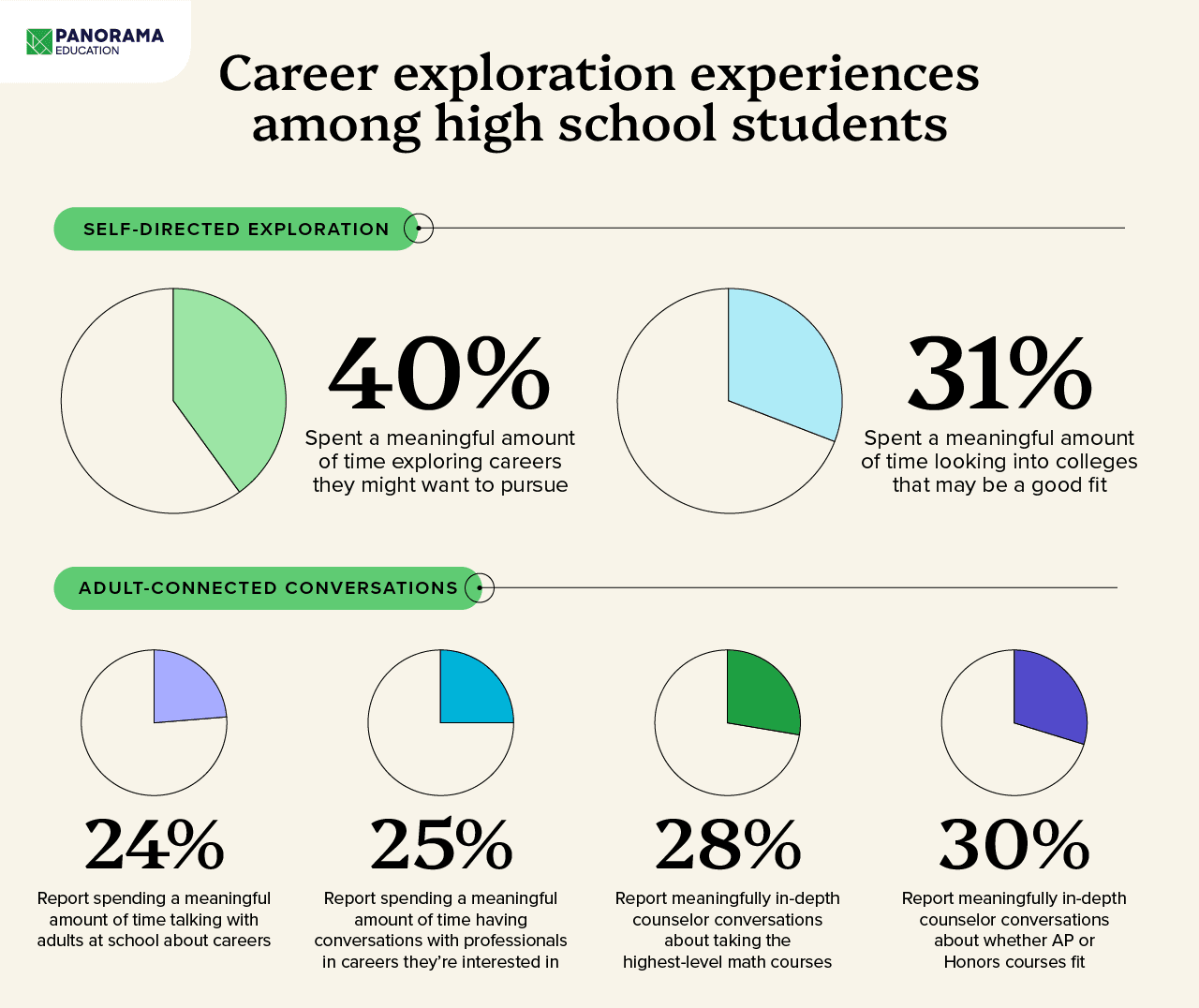
Our data shows that 40% of high schoolers say they have spent a meaningful amount of time exploring careers they might want to pursue, and 31% say they have spent a meaningful amount of time looking into colleges that may be a good fit.
Adult-connected experiences are less common:
- 24% of high school students report spending meaningful time talking with adults at school about careers that could be a good fit.
- 25% of high school students report meaningful conversations with professionals working in careers they're interested in.
- 28% of high school students say they have had meaningfully in-depth conversations with their counselor about taking the highest-level math courses they can.
- 30% of high school students say they have had meaningfully in-depth conversations with their counselor about whether AP or Honors courses would be a good fit.
There’s a reason these conversations can be difficult to make time for. In many districts, counselors are supporting large numbers of students while balancing testing coordination, scheduling, and other responsibilities. The challenge isn’t recognizing the value of these conversations. It’s finding the capacity to have them with every student.
And that's where the opportunity lies. Where can schools and districts create more opportunities for these relationships? What does meaningful career exposure and connection look like in practice, whether through classroom partnerships, peer mentoring, professional networks, or reimagined counselor roles?
College, Career, and Graduation Pathway Planning May Be Starting Too Late
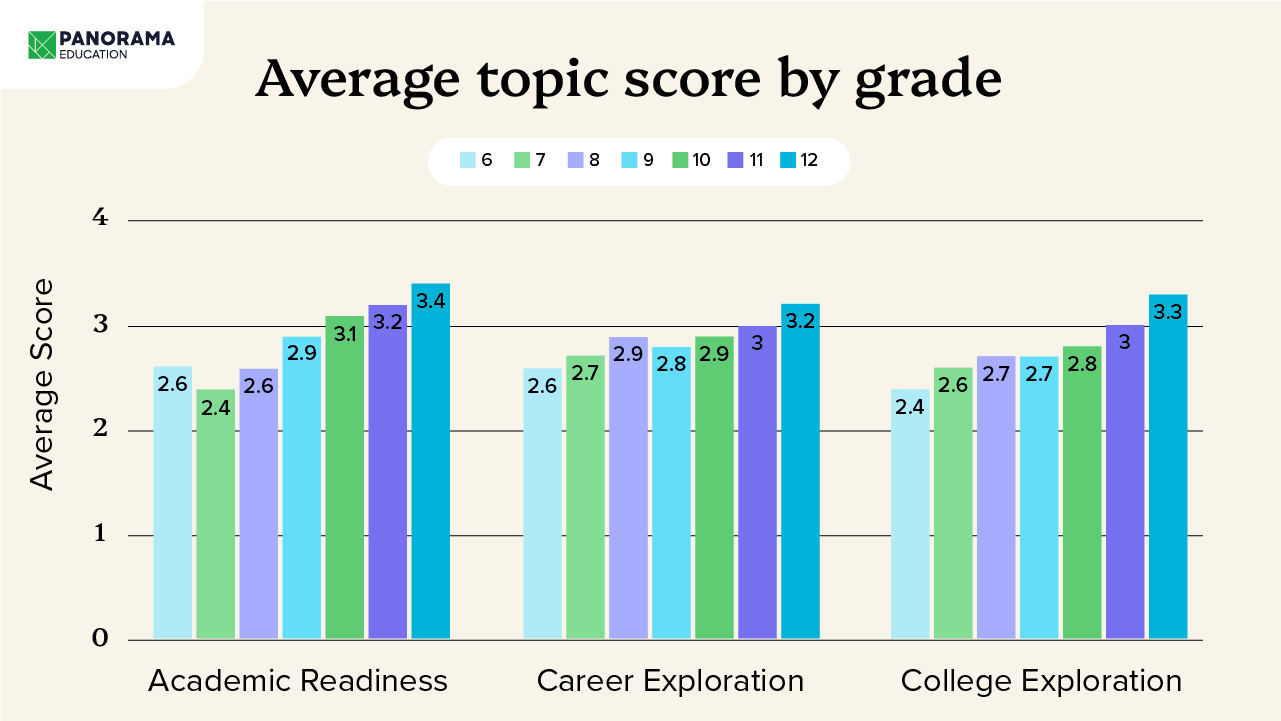
Overall, students show stronger college and career readiness as they move through high school. But when we look at where those gains actually occur, a pattern emerges.
In 9th grade, only 47% of students report a firm understanding of which courses they need to take to reach their college and career goals. By 12th grade, that rises to 62% of students, but even then, readiness levels are only moderate.
Some of the biggest gains happen between 11th and 12th grade. For example, the percentage of students who report spending substantial time talking with adults at school about potential careers jumps from 24% to 31% in just one year, compared to 20% in 9th grade. Similar gains appear in college exploration activities, including researching colleges and majors, understanding financial aid, and exploring college costs.
But by the time many of these conversations are happening, students have already made decisions about courses, programs, and pathways that can shape what comes next. Earlier exposure gives students more time to explore their interests, understand their options, and use what they learn to make informed choices.
The opportunity is to shift more of these experiences earlier, giving students the clarity and connections they need while there’s still plenty of time to act on them.
What School and District Leaders Can Do
The data points to something schools already know but may not always have the capacity to act on: college and career readiness can't wait until 12th grade. Here’s what that can look like in practice:
- Start earlier. College and career readiness builds over time. Give students opportunities to explore careers and connect with adults beginning in middle school, before they’re making consequential choices about high school courses, programs, and pathways. Then build on those experiences throughout high school as their interests and goals become clearer.
- Pair the right resources with meaningful conversations. College and career exploration is most useful when students can connect what they’re learning to their own goals and the opportunities actually available to them. Give students access to personalized, locally relevant information about courses, programs, pathways, and careers, alongside counselors, teachers, and other adults who can help them make sense of their options and decide what comes next.
- Create more capacity for direct student support. When counselors are balancing student support with scheduling, documentation, and other administrative work, technology can help reduce some of that burden and free up more time for meaningful conversations with students. Schools can also think beyond the counseling office: What other staff can play a role? Which community partners can help students build connections and explore what’s possible?
- Build a sequence of college and career readiness experiences. Rather than thinking about career readiness as a unit students complete at one point in high school, consider what conversations and experiences students need in 7th grade, 9th grade, 11th grade, and how each can build on the last.
About the Research
These findings are based on responses from nearly 34,000 students in grades 6-12 across 98 schools during the 2025-26 academic year. Students responded to Panorama’s Graduation Readiness Reflection survey on topics including academic readiness, career exploration, and college exploration. Findings reflect early adopters of the survey and are descriptive and exploratory.