
Personalized Graduation Plans (PGPs) connect students to their interests, strengths, and goals. When they're done well, they guide real planning conversations between counselors, students, and families.
A strong PGP shows students a concrete path toward graduation and beyond. It also evolves as students' circumstances change—new interests, improved grades, different college plans.
In this post, we'll walk through how to create a strong PGP. We'll also share a template you can customize for your state or district requirements.
What are Personalized Graduation Plans?
Many states require Personalized Graduation Plans, though they go by different names. Indiana calls them Graduation Pathways. Washington calls them High School and Beyond Plans. But the concept is the same: personalized planning that connects academic progress to career and post-secondary goals.
Why Comprehensive Graduation Planning Matters
Strong PGPs bring together information that usually stays separate: academic progress, CTE alignment, career exploration, post-secondary readiness. When these pieces are connected in one plan, counselors can have more meaningful conversations with students. Students see how their coursework connects to their goals. Families understand the full picture. The plan becomes a real tool, not just a compliance document.
How to Write an Personalized Graduation Plan
Comprehensive PGPs require pulling together information from multiple places. They require counselors to have time for students. And counselors must be able to make updates to PGPs as student needs, goals, and circumstances change.
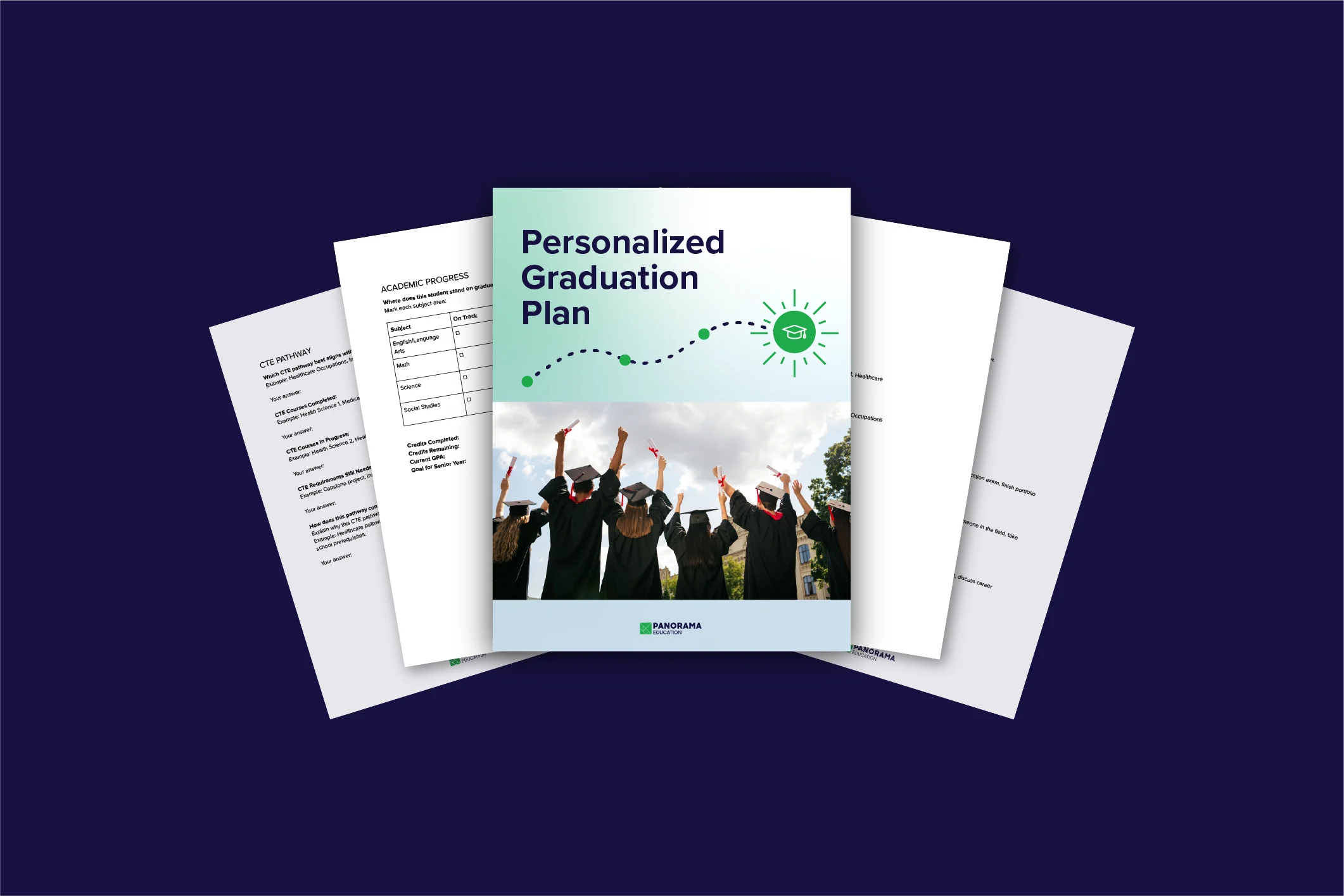
We've created a template that shows the information to include and discuss: career exploration, CTE alignment, academic progress, distinctions, post-secondary readiness, and action steps.
The template walks through:
Student Context
- Name
- Grade
- Career goal
- CTE interest
- Post-secondary plan
Career Exploration
- What related careers might fit?
- What skills matter?
- What education or training is required?
CTE Pathways
- Which pathway aligns with their goal?
- What courses are done?
- What's remaining?
- How does this support their stated career?
Academic Progress
- Where do they stand on graduation requirements by subject?
- How many credits completed, how many remaining?
Distinctions
- What honors, dual credit, AP/IB, or certifications are available?
- What's in progress?
Post-secondary Readiness
- Colleges to explore
- Scholarships to pursue
- Financial aid to plan for
Action Steps
- What happens this semester?
- Next year?
Each section includes example prompts so counselors know what kind of information to gather. You can download the template here and share with school and district teams.
Making This Sustainable at Scale
Creating these plans manually takes significant time. Doing this for hundreds of students every year is almost impossible to sustain.
Panorama brings all the pieces together. Counselors enter a student's career goal, CTE interest, and post-secondary plan. Panorama Pathways then generates a comprehensive PGP using existing data in the system, like graduation and CTE progress, distinctions, career information, and scholarship recommendations.
Counselors can review and refine the plan, the update it as a student's goals or circumstances change. Plus, families get clear communication and district leaders have visibility into students' plans and progress.
Ultimately, getting PGPs right matters not just for compliance, but for stronger student outcomes. When students have plans that evolve with them, they gain greater agency over their futures.