





Boardman Local School District serves 3,000 K-12 students in northeastern Ohio and has partnered with Panorama since 2024. As the district worked to strengthen student support, leaders saw an opportunity to make intervention planning less manual, more consistent, and more grounded in a complete view of each student. Across Boardman’s seven schools, that meant giving educators a clearer way to understand student needs without piecing information together from multiple systems.
Challenges
- Student data lived in too many places, making it difficult for staff to quickly understand the full picture of each student.
- Teachers and teams were spending significant time collecting information before they could make decisions for students.
- RIMPs (Reading Improvement and Monitoring Plans), IAT (Intervention Assistance Team) reports, and behavior processes needed to become more consistent across the district, especially as Boardman worked to support compliance and intervention planning.
- Intervention meetings were sometimes relying on educator impressions rather than data, making it harder to identify what students actually needed.
Solution
Results
- Educators can now access student information in one place, giving teams a clearer view of each child’s needs as they plan next steps.
- Boardman expects to save 5 to 10 minutes per RIMP as it rolls out a more structured workflow, giving teachers more time to focus on student support.
- A district-designed Solara tool is helping make IAT (Intervention Assistance Team) reports more consistent.
- Teams can make more data-driven decisions in intervention meetings, with better visibility into student needs, prior supports, and what has worked so far.
Challenges
Across Boardman’s schools, student information was scattered in different places. Staff often had to search multiple systems to understand a student’s needs before deciding what support should come next. As Bart Smith, Coordinator of Student Supports, said: “We didn’t really have a central data hub for people to really go in and look at the holistic child.”
That lack of visibility also took time away from decision-making. Before teams could talk about what a student needed, educators had to gather information, along with cumulative files and other records. Smith described the toll that process could take: “When these teams are trying to put in hours of work just to get data, then where are we going from there? We’re exhausted by the time that’s completed.”
The district recognized that time spent gathering information could be redirected toward planning support.
Boardman also needed more consistency in the processes that guided interventions. That challenge showed up in RIMPs (Reading Improvement and Monitoring Plans), the IAT (Intervention Assistance Team), and behavior plans.
RIMPs are state-required individual reading plans for students who need additional support. At Boardman, those plans could be difficult to keep current as new reading data came in, including DIBELS results. The IAT process gave Boardman a way to review whether a student might require more intensive support or a possible special education evaluation, but the district wanted that process to be more consistent across schools. Behavior plans raised a similar issue, with staff needing an easier way to see which supports were in place and how students were responding. Without a clearer process, similar intervention work could look different from school to school.
Inconsistency showed up most clearly in intervention meetings. Jared Cardillo, Director of Instruction, said some conversations were leaning too heavily on general impressions of a student rather than data. A teacher might describe a student as nice or hardworking, but those descriptions did not give leaders enough to decide what should happen next. “We need data in order to make decisions,” he said.
Boardman needed intervention meetings to stay grounded in evidence, including what had already been tried and whether it was working.
Solution
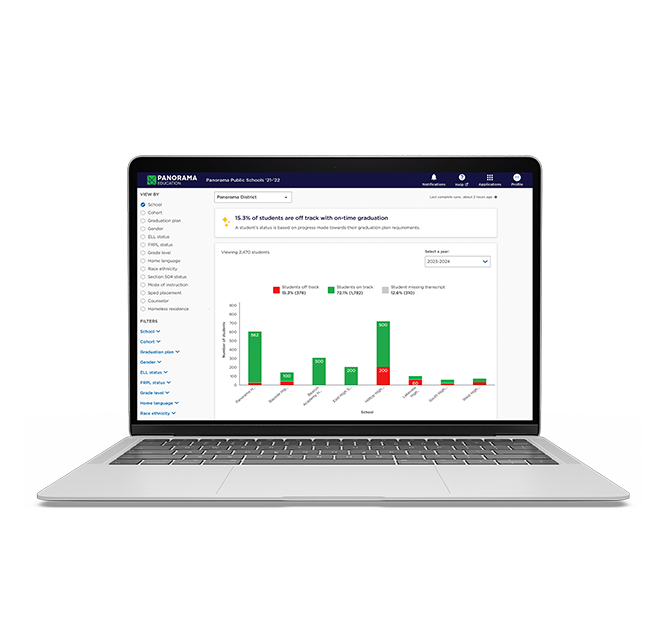
Boardman adopted Panorama Student Success so staff could see student information in one place and use it to guide intervention work. That mattered as the district continued building out PBIS and MTSS supports across schools. Smith said Panorama stood out because teachers could get meaningful information without adding too much manual work. As he explained, “Panorama just really brings it together quickly so teachers can see their students and see what they need to move forward.”
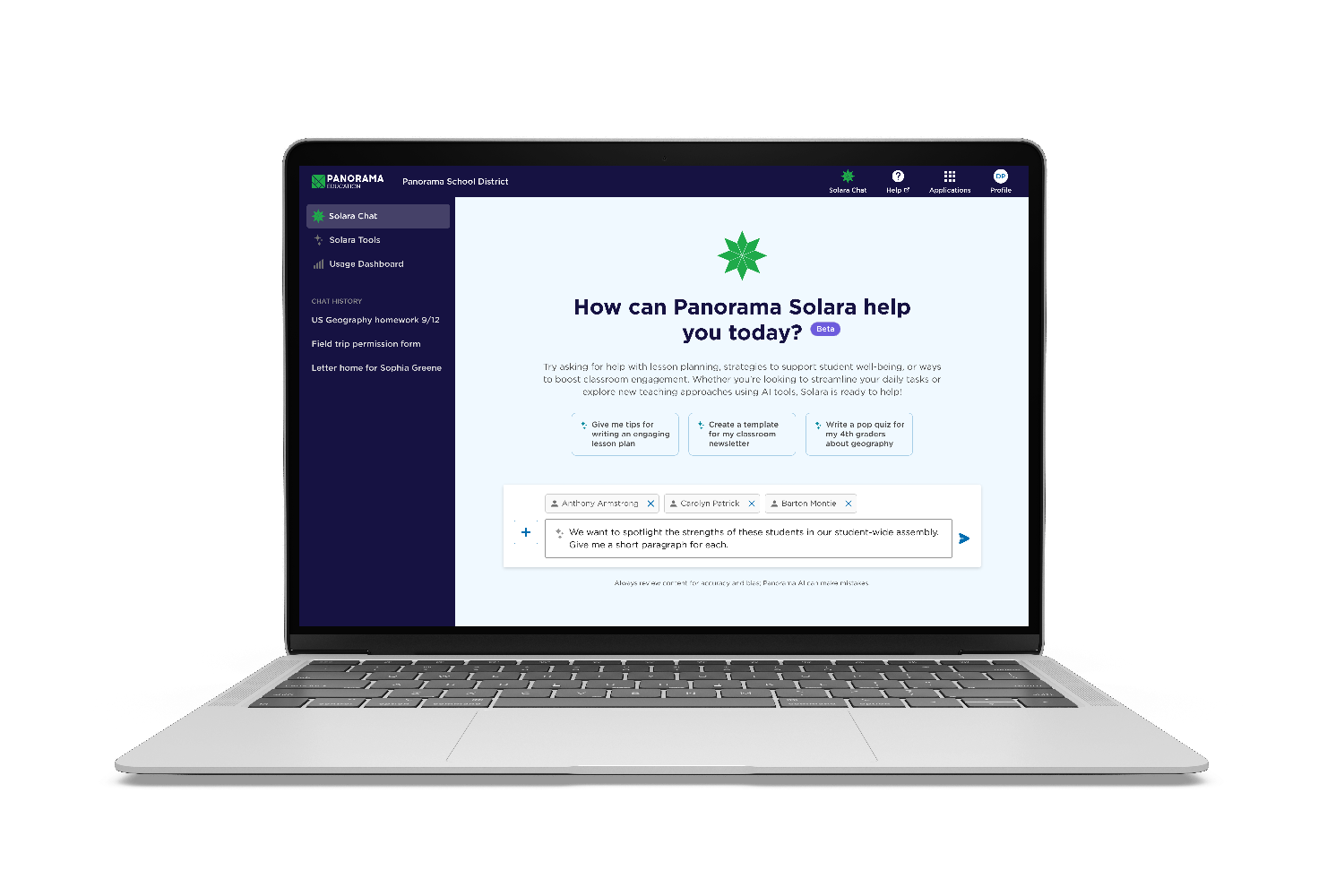
Boardman then began using Panorama Solara to make that student information easier to use in day-to-day planning. Cardillo explained how the team uploaded years of state testing data into Panorama and used Solara to summarize trends for teachers, giving departments a clearer view of student patterns. Smith also built a custom Solara tool for IAT reports: “Now, at the click of a button, we can enter in the student, put our own observational data in, and then pull a report that’s consistent across the district as far as what that student needs holistically,” he said.
That consistency mattered because teams could now bring a shared, data-based understanding of each student into intervention conversations. Boardman is also preparing to roll out its RIMP workflow in Panorama, with the goal of making reading plans easier to update as students receive support.
Results
Boardman educators can now begin meetings with a more complete picture of each child. Teams can use Panorama to understand a student’s needs more quickly and bring that context into planning conversations. Cardillo described the shift: “Instead of sitting there and using all your time putting the data together, it’s pretty much done for you. Now, educators can sit at the table and say, ‘Okay, here's the data. Let's make a plan.’” With the student picture already assembled, meetings can move more quickly.
The district also expects the RIMP workflow to save teachers time. Smith estimated that the new process “Would probably save teachers at least 5 to 10 minutes per RIMP, which is significant when you're doing 20 or 30 of them.”
For teachers managing multiple reading plans, those minutes add up quickly. The district sees that time as something educators can put back into planning support and connecting with students. As Smith put it, the goal is “To reduce the work on our adults to give them the time to have that personal connection with the kids.”
Boardman is also using Panorama to create a more longitudinal view of student support. Behavior plans and student summaries can help staff see what has worked for a student before that student moves to another teacher or grade level. The district wants to bring that same approach to RIMPs, with reading plans rolling into intervention plans that staff can update throughout the year. Smith explained why that kind of tracking matters: “When you sit down in that monthly meeting and you go over everything that we've done, and then we start plugging it in [to Panorama], it's very evident if we are on track or off track.”
Student support meetings are also becoming more grounded in evidence. The custom Solara tool Smith built gives IAT teams a consistent report to work from before they make decisions. The report helps keep the conversation focused on the student’s documented needs and the next support to try, while keeping educator expertise at the center.
Next Steps
Boardman is still identifying additional ways to use Student Success and Solara across student support work. The district is preparing educators to use the new RIMP workflow while also looking ahead to future uses, including counselor support and parent-teacher conferences.
For Cardillo, the next step is continuing to build educator engagement with Panorama: “We have to do our job to keep our staff engaged, and keep growing the percentage that’s using it.”
![How AI Ready Is Your District? [Infographic]](https://www.panoramaed.com/hubfs/iStock-1912513615.jpg)